Custom Plastic Compounding & Modified Pellets

Custom Formulation · Recipe Development · Color Matching · Small-Batch Trial

Jinsu operates professional compounding lines capable of customizing various modified plastic pellets:

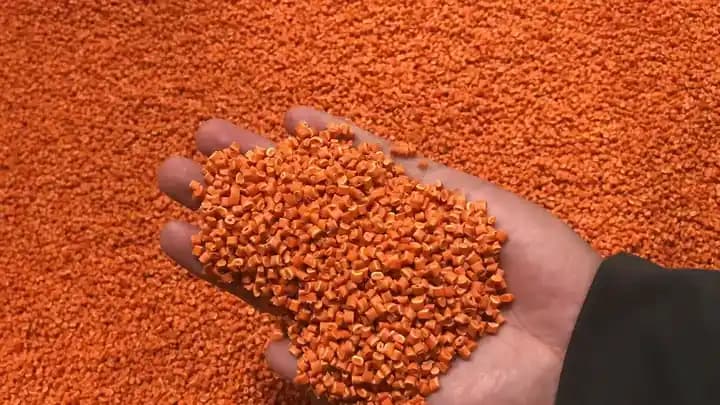
Hand holding orange modified plastic pellets — Jinsu custom compounding

Why Choose Jinsu Compounding

Precision dosing, unique screw design and full-process quality control — engineered for batch-to-batch consistency.

4 High-Precision Gravimetric Feeders per Line

Every twin-screw extruder is equipped with 4 advanced gravimetric feeders, holding formula ratios to tight tolerances for stable material performance and consistent part dimensions.

Unique Screw Architecture

Customized screw element configuration delivers high-shear dispersion — glass fiber, flame retardants and additives are distributed uniformly for reliable, repeatable mechanical properties.

14 Twin-Screw Lines · 3,000+ t/Month Capacity

From 25 kg trials to full container orders, our 14 compounding lines and 3,000+ tons monthly capacity scale with your business.

4-Stage Full-Process QC

Dosing, mixing, extrusion and finished-goods inspection under an ISO 9001 quality system — every batch is traceable.

Reinforcement

Glass fiber, carbon fiber reinforcement for improved strength & rigidity

Flame Retardant

UL94 V-0/V-2 grades, halogen-free eco-friendly FR solutions

Toughening

Enhanced low-temperature toughness, improved impact performance

Color Matching

Pantone precision color matching, ΔE ≤ 1.0

Conductive/Antistatic

Conductive carbon black/carbon fiber additives for ESD requirements

Weather Resistance

UV stabilized for long-term outdoor use without discoloration

Materials We Compound

Six material families × full modification directions — click through for grade specifications

Material FamilyCustom Modification OptionsTypical ApplicationsLink
PA6 / PA66 NylonGF10–50% reinforced · toughened · wear-resistant (MoS₂/PTFE) · FR V-0 · hydrolysis-resistant · thermally conductiveGears, clips, power tool housings, radiator tanks, cable tiesView PA grades →
PP PolypropyleneFlame retardant V-0/V-2 · toughened · transparent · FR masterbatchAppliance housings, socket panels, sanitary partsView PP grades →
ABS / PC-ABSTransparent (MABS) · heat resistant · flame retardant · halogen-free FR PC/ABSElectrical housings, chargers, office chair partsView ABS grades →
PC PolycarbonateTransparent · FR V-0 · silicone PC · glass reinforcedEV charger enclosures, transparent windows, LED partsView PC grades →
PPS & Special High-TempGF reinforced · wear resistant · high temperature (HDT ≥260°C)Under-hood parts, electronic connectors, pump impellersPPS selection guide →
Masterbatch & FunctionalPantone / RAL color matching · FR masterbatch · additive concentratesCustom color batches, processing aid solutionsAsk about colors →

Industries We Serve

Our custom compounds run in production lines across five core manufacturing sectors — each backed by proven, field-validated grades.

Home Appliances

Housings and internal parts for air conditioners, washing machines and small appliances — flame retardant, heat resistant and color-stable.

Recommended grades: FR PC/ABS · FR-PP

Power Tools

Drill and grinder housings that survive drop tests and job-site abuse — high rigidity, impact resistant and flame retardant.

Recommended grades: PA6-GF30 · FR PC/ABS

Automotive Parts

Under-hood and structural components with long-term heat resistance, mechanical strength and dimensional stability.

Recommended grades: PA66-GF30

Electronics & Electrical

Connectors, switchgear and EV charging components — UL94 V-0 flame retardancy with CTI and glow-wire compliance.

Recommended grades: PA66-FR · FR PC/ABS

Office Furniture

Chair mechanisms, casters and structural parts — toughness and fatigue resistance for years of daily use.

Recommended grades: PA6-GF30 · PA6-40GF

Explore industry material guides

Custom Compounding Cases: From Drawing to Mass Production

Three real custom projects — formulations developed by Jinsu engineers, photos of actual production parts

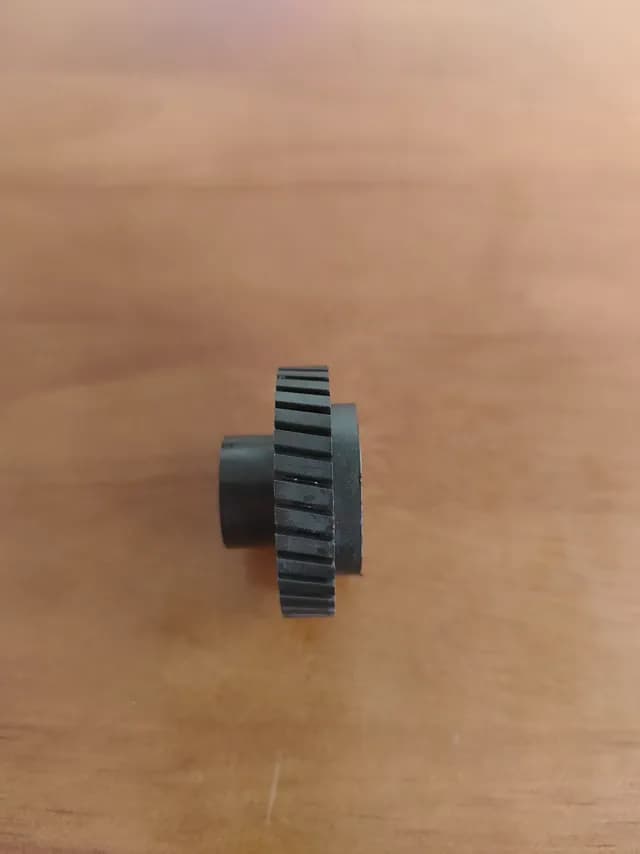
Wear-resistant PA66 custom injection-molded gears
Wear-resistant PA66 (MoS₂/PTFE lubricated)

Wear-Resistant Transmission Gears

Under continuous dry friction the original material wore quickly and ran noisy. Custom lubricated PA66 lowered the friction coefficient to 0.15–0.25 (typical) with self-lubrication, no external grease needed.

Significantly longer wear life and quieter running — now in stable mass production replacing the original material

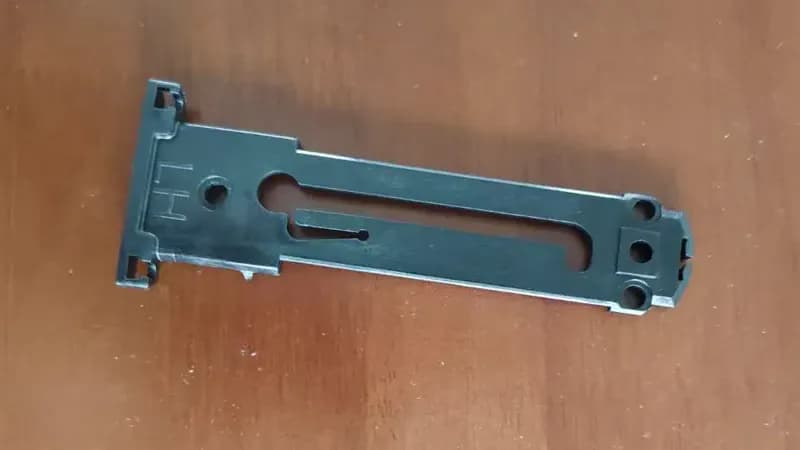
Toughened PA6+15GF custom structural clips
Toughened PA6 + 15% GF

Structural Clips & Fasteners

Clip-style structural parts must survive repeated assembly without cracking. Custom toughened glass-fiber system balances stiffness and ductility: notched impact typically ≥15 kJ/m², no cracking in low-temperature drop tests.

Passed repeated insertion-removal validation, replacing an imported grade with domestic sourcing

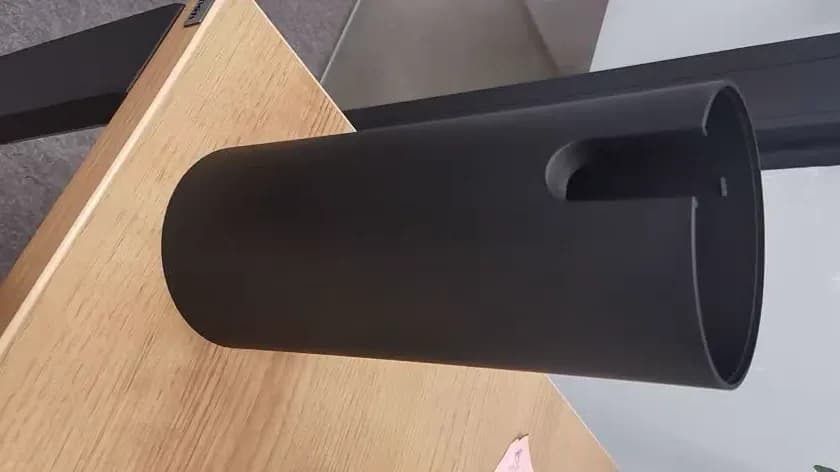
Thermally conductive PA6 custom LED spotlight housing
Thermally conductive PA6 (insulating)

LED Spotlight Lamp Housing

Metal housings are heavy and create electrical safety risks. Custom thermally conductive insulating PA6 with 1.0–2.0 W/m·K replaces metal in a single injection-molded part.

Lighter luminaire, eliminated conductivity risk, thermal management meets long-life design targets

Have Custom Requirements? Contact Us

Jinsu operates professional compounding lines capable of customizing various modified plastic pellets:

Send Custom Requirement

Our Compounding Process

From raw material to finished pellets, every step is precisely weighed, mixed, extruded and inspected.

MoveProcessingInspectionStorage
1

Raw Material & Formulation

Production Planning
Material Requisition
Base Resin Dosing
Additive Dosing
Color Dosing
2

Mixing & Verification

Dosing Inspection
Mixing & Feeding
Mixing Inspection
3

Extrusion & Pelletizing

Twin-Screw Extrusion
Cooling & Air Drying
Pelletizing & Homogenizing
Extrusion Inspection
Packing
4

Final QC & Warehouse

Workshop QC Area
Finished-Goods Inspection
Passed → Qualified Warehouse
Failed → Non-Conforming Warehouse

From Inquiry to First Delivery

A standard custom project completes in 4–6 weeks, with clear deliverables at every stage

  1. 11–2 business days

    Requirement review & material analysis

    Confirm operating conditions (temperature, load, safety standards, regulations); match an existing grade or start a custom formulation

  2. 25–7 days

    Formulation design & lab sampling

    Formulation design and lab-scale compounding; free 5–10 kg samples with a preliminary TDS

  3. 37–10 days

    Mold trial validation (T1)

    Injection trials verify flow, shrinkage and appearance; formulation iterated if needed

  4. 45–7 days

    Pilot batch production

    25–500 kg pilot batch for in-assembly validation; formulation and process window locked

  5. 510–15 days

    Mass production & first shipment

    Production scheduled with COA and retained samples per batch, shipped FOB Shanghai/Ningbo

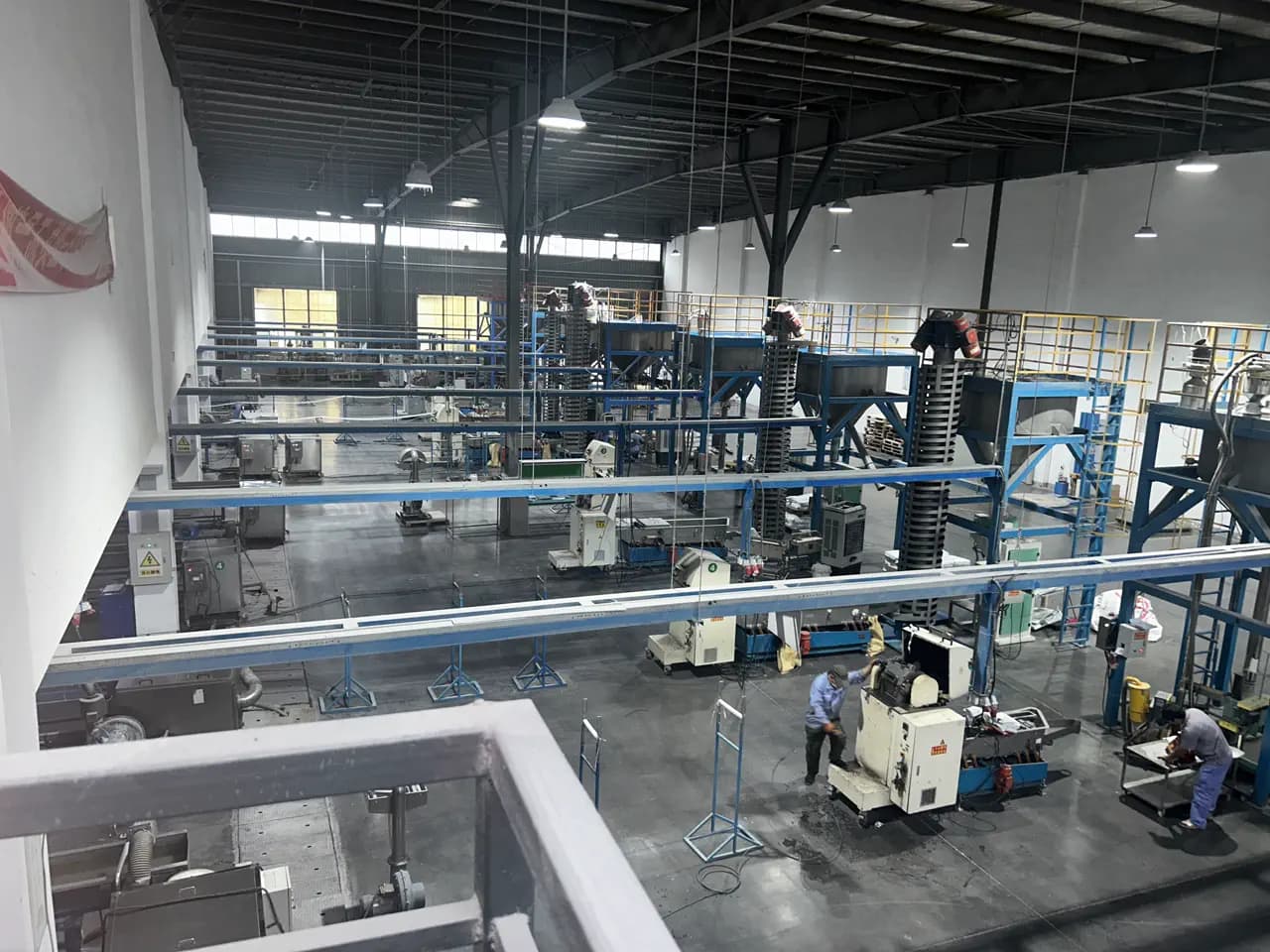
Jinsu Suzhou factory twin-screw extrusion production line

Production Capacity You Can Verify

Real shots from our Suzhou factory — custom and volume orders run on the same managed lines for reliable lead times

14
Twin-screw extrusion lines
3000+
Tons monthly capacity
ISO 9001
Certified quality management system
100%
Batch key-property testing + 2-year retained samples

How to Start Your Custom Project

From first inquiry to mass production — transparent terms, no surprises.

Free Samples

5–10 kg free sample for testing; you only cover freight. Dispatched within 1–3 working days.

MOQ

Standard grades from 25 kg (one bag). Custom compounds typically 100–500 kg depending on formulation complexity.

Lead Time

Stock grades: 1–3 working days. Custom compounds: 7–15 working days depending on formulation and quantity.

Formulation Development

Send us your sample, specification or a competitor's product — our engineers develop the recipe with you.

Quality Documents

ISO 9001:2015 certified. COA with every batch; third-party test reports available on request.

Trade Terms

FOB, CIF, EXW supported. Sea, air and rail freight; T/T and L/C payment accepted.

What Determines Custom Compounding Cost

Custom compounding is priced per project. Four factors drive your quotation — our engineers explain each one before you commit.

Base Resin Selection

PA6 is more economical than PA66; PC and alloys sit higher. Choosing the lightest resin that meets your spec is the biggest cost lever — we help you avoid over-specifying.

Additive System

Glass fiber, flame retardants (halogen-free systems cost more than halogenated), tougheners, UV stabilizers and conductive fillers each add to recipe cost in proportion to loading.

Order Volume

Larger batches spread fixed compounding and lab-verification costs over more kilograms. Annual contracts unlock better resin pricing from our bulk procurement.

Color & Special Requirements

Standard black or natural adds no extra cost; Pantone color matching, food-contact or special certifications add sampling and testing steps.

Send us your specification or sample for an exact quotation — free samples are available before you place any order.

Get My Quote

Verified by Our In-House Laboratory

Every custom formulation is validated before and after production with TGA, XRF, FTIR, universal testing machines, impact testers, melt flow indexers and Vicat softening point testers — so the pellets you receive match the datasheet, batch after batch.

Why Choose Jinsu Compounding →

Custom Compounding Capability Range

Standard capability envelope below; special requirements beyond it are subject to review

Glass fiber reinforcementGF10 – GF50%
Flame retardancyUL94 5VA / V-0 – HB (0.4–3.0 mm)
Notched impact strength5 – 90 kJ/m² (by toughening level)
Mineral / filler loading10 – 40%
Thermal conductivity (insulating)0.2 – 3.0 W/m·K
Heat deflection temperatureUp to 280°C (high-temp GF systems)
Color customizationPantone / RAL matching, batch ΔE ≤ 1

Custom Compounding FAQ

What information do you need to quote a custom compound?+

Your target application, preferred base resin (or let us recommend one), required mechanical, thermal or flame-retardancy specifications, color, and estimated annual volume. A drawing or photo of the part also helps. Our engineers reply with a formulation proposal and quotation within 24 hours.

Can you reverse-engineer a sample or competitor product?+

Yes. Send us a physical sample or a competitor's datasheet; our laboratory analyzes it with TGA, XRF and FTIR to identify the base resin and additive system, then reproduces or improves the formulation. You receive complete test data for approval before mass production.

What is the MOQ for custom compounding?+

Standard modified grades start from 25 kg (one bag). Fully custom formulations typically start at 100–500 kg depending on formulation complexity and raw material MOQ. For new projects we recommend starting with a 5–10 kg free sample trial.

How long does sampling and development take?+

Samples of standard grades are dispatched within 1–3 working days. Custom developments usually take 7–15 working days including formulation design, compounding and laboratory verification. After your approval, mass production is backed by 3,000+ tons of monthly capacity.

Can you match a specific color (Pantone/RAL or physical sample)?+

Yes. We match Pantone/RAL codes or your physical color sample with a spectrophotometer, achieving ΔE ≤ 1.0. Color masterbatch is dosed gravimetrically on-line for batch-to-batch color consistency.

Which base resins can Jinsu compound?+

PA6 and PA66 are our core specialty, and we also compound PC, PC/ABS, ABS, PP and engineering alloys — with glass fiber reinforcement, flame retardancy, toughening, conductive, UV-stable and wear-resistant modifications. Browse our product range for available grades.

Do you provide TDS, COA or third-party test reports?+

Every batch ships with a COA. A complete TDS is provided for each grade, and SGS or other third-party test reports are available on request. Our quality system is ISO 9001:2015 certified.

Can you match or replace a material I currently buy from another supplier?+

Yes. Send us a sample or the TDS/datasheet and we run a formulation analysis with benchmark sampling — replacement samples typically ship in 5–7 days. Alternatives meet RoHS/REACH requirements, and third-party test reports can be arranged on request.

What is the MOQ for custom colors and custom formulations?+

Existing grades start at 25 kg. Production MOQ for custom colors and formulations is typically 500 kg–1 ton; sampling and pilot batches can be as low as 25 kg, confirmed during project review.

How do you guarantee batch-to-batch consistency?+

Formulation and process parameters are locked after approval and never changed unilaterally. Every batch ships with a COA, key properties are 100% tested, and retained samples are kept for two years for full traceability.

What if the trial sample does not meet our requirements?+

We adjust the formulation and re-sample for free until your validation passes — each sampling round takes 5–7 days. Mold-trial related costs are negotiated per project.

How long does a custom compounding project take?+

A standard project runs 4–6 weeks from inquiry to first delivery: requirement review 1–2 days → formulation sampling 5–7 days → mold trial 7–10 days → pilot batch 5–7 days → mass production shipment 10–15 days. Rush projects can be compressed to around 3 weeks by running stages in parallel.

Get Your Custom Formulation & Quote

Describe your application — our engineers reply with a preliminary formulation and quote within 1–2 business days

Learn More Before You Specify

Have Custom Requirements? Contact Us

Send Custom Requirement