
Polyamide (PA, nylon) is one of the largest-volume and most versatile engineering plastics, and modified PA nylon (PA6/PA66 with glass fiber, toughening, flame retardancy and other functional systems) is exactly the workhorse material purchased by downstream industries from home appliances to new-energy vehicles. For procurement and R&D engineers, the real technical barrier is not "whether it can be made", but how to solve three common industry challenges one by one: moisture-induced deformation, surface fiber bloom, and the rigidity gap in metal replacement. This article explains Jinsu's three technical routes in modified PA — boiling-free reinforced, high-gloss piano black, and high-glass metal-replacement compounds — with material design logic, typical applications and quantifiable performance gains.
1. Boiling-Free Reinforced PA: Remove One Process Step, Remove One Failure Risk
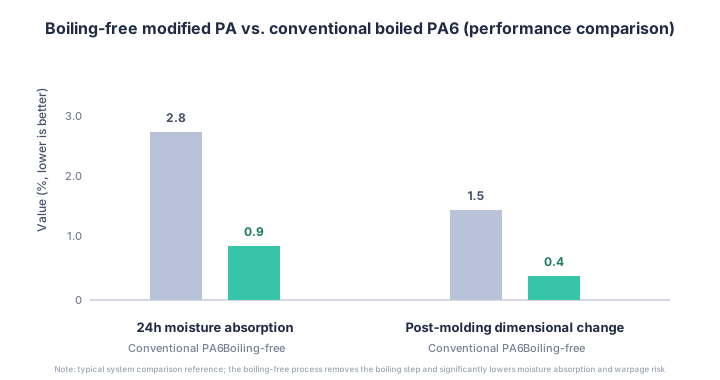
Unreinforced PA6/PA66 can absorb up to 2%–3% moisture at saturation, causing visible dimensional swelling and warpage of molded parts after moisture exposure. The traditional fix is a water-boiling conditioning step before assembly to "pre-saturate and stabilize dimensions". But this step lengthens lead time and introduces batch consistency risks.
Jinsu's boiling-free reinforced PA combines formulation and glass-fiber interface treatment to keep high impact strength while significantly reducing moisture absorption and post-molding dimensional change, so parts can skip the boiling step and go straight to assembly — critical for power tools, sports equipment and structural clips where "drop impact + dimensional sensitivity" matter.
2. High-Gloss Piano Black PA: Give an "Engineering Material" the Look of an "Appearance Part"
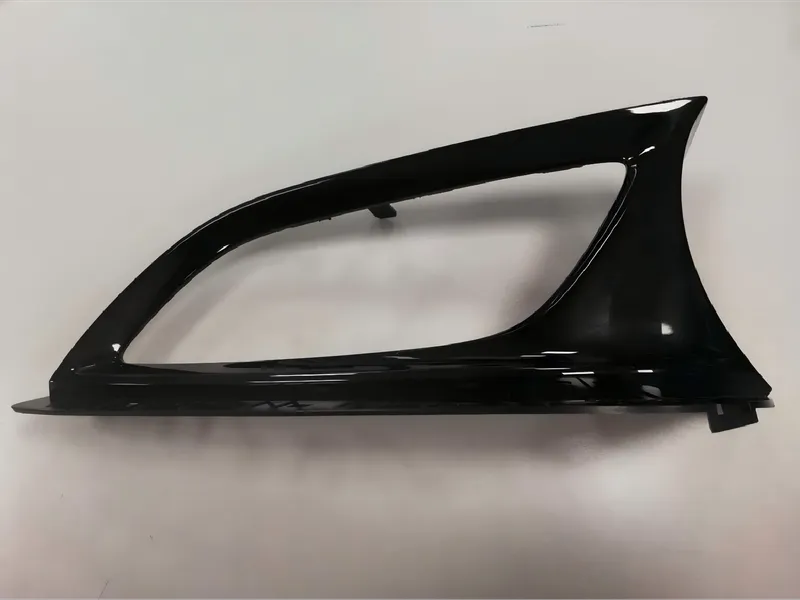
For visible appearance parts such as TV bases, automotive AC vents and appliance panels, customers want both nylon's structural strength and a piano-lacquered high-gloss black finish. The challenge: high gloss usually demands high mold temperature, and an overly narrow processing window hurts yield and energy efficiency.
Jinsu's high-gloss piano black PA uses flow and crystallization control to achieve a wide processing window — a glossy black finish at about 120°C mold temperature, combining excellent appearance with weatherability, moving nylon from "hidden structural parts" to "premium visible appearance parts".
3. High-Glass High-Rigidity PA · Metal Replacement: Balancing Rigidity, Appearance and Cost
The essence of "metal replacement" is substituting lighter materials for metal structural parts — provided rigidity and strength truly match. Raising glass fiber content is the most direct path, but the higher the glass content, the more prominent the surface issues: fiber bloom, warpage and whitening.
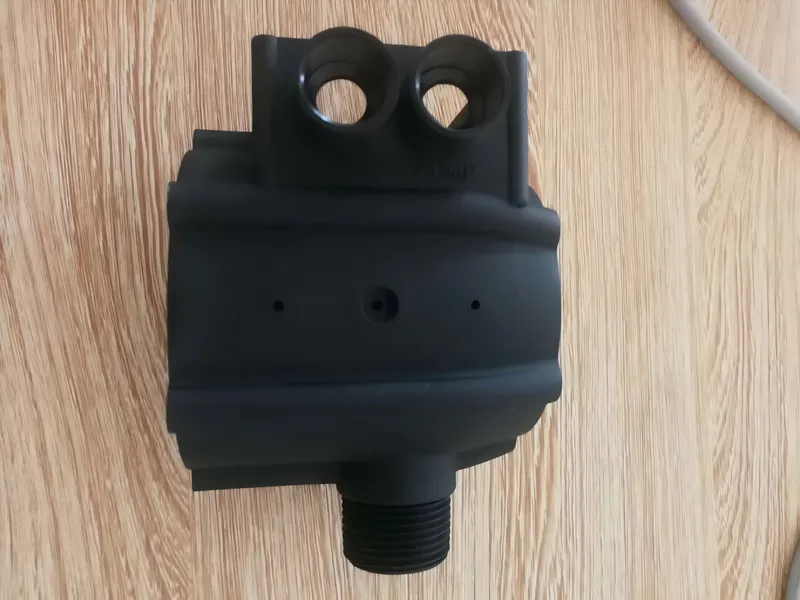
Jinsu's high-glass high-rigidity PA system reaches up to 65% glass fiber while still delivering a bloom-free surface; for example, PA6+GF50 is already used stably in water pump housings and automotive mirror housings — pressure- and load-bearing structural parts — combining weight reduction, corrosion resistance and integrated molding.
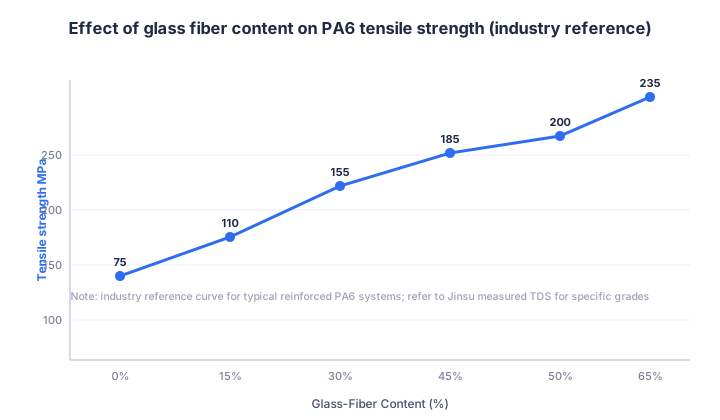
As glass fiber content rises from 0% to 50%, the tensile strength of PA6 increases from about 75 MPa to about 200 MPa — a typical "rigidity for cost" trade-off. For fiber bloom and warpage issues common in high-glass injection molding, see our in-depth analysis of nylon injection molding surface defects, or check the technical parameters of PA6+30%GF and PA66+30%GF.
4. Where Modified PA Shines: Full-Spectrum Coverage from Automotive to Industry
The value of modified PA lies in spanning multiple high-value downstream sectors: automotive structural parts and interior/exterior trims, electronics and connectors, industrial pump and valve housings, appliance appearance parts and sports equipment. Understanding the application mix helps you "match the right grade to the right job".
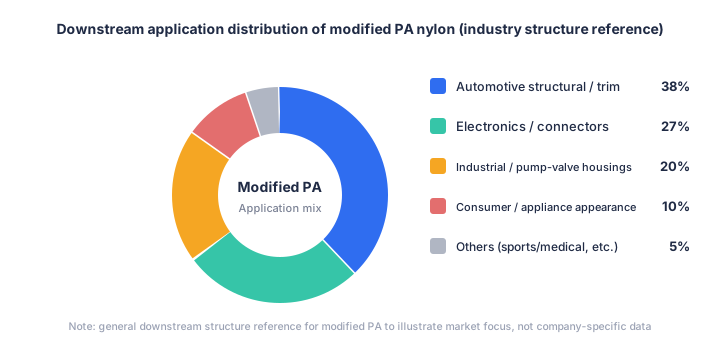
Automotive structural parts and trims account for the largest share (about 38%), followed by electronics and connectors (about 27%). For grade-selection differences between PA6 and PA66 (moisture sensitivity, heat resistance, strength), see our complete PA6 vs PA66 comparison guide.
5. Modified PA Selection FAQ
Q1: Can boiling-free PA really skip the water-boiling step?
Yes. Boiling-free reinforced PA lowers moisture absorption and dimensional change through formulation and glass-fiber interface treatment; most power tool and clip-type parts can go straight to assembly without conditioning. We recommend sharing your working conditions (load, tolerance, ambient humidity) at the mold design stage so the Jinsu technical team can validate the formulation.
Q2: What mold temperature does high-gloss black PA need?
Jinsu's high-gloss piano black PA delivers a glossy black finish at about 120°C mold temperature — a wider processing window with better yield and lower energy than conventional high-gloss solutions (which usually require 140°C+). Mold temperature, holding pressure and gate design still affect final gloss; Jinsu provides full injection process support.
Q3: Which structural parts suit PA6+GF50?
PA6+GF50 suits load-bearing structural parts requiring high rigidity, fatigue resistance and dimensional stability — typically water pump housings, automotive mirror housings, industrial pumps/valves and power tool housings. For parts that also require hydrolysis resistance or extreme-temperature impact, consider special grades such as hydrolysis-resistant PA66.
Q4: What are the MOQ and sample policy for modified PA?
Free samples: 5–10 kg. Trial orders: minimum 25 kg. Regular production: minimum 1,000 kg. The customer pays shipping costs.
Q5: Can Jinsu develop custom modified formulations?
Yes. Jinsu operates 14 compounding lines with 3,000+ tons monthly capacity, supporting custom formulations in glass reinforcement, toughening, flame retardancy, wear resistance, hydrolysis resistance and high gloss. For details, contact the Jinsu technical team.
6. Jinsu Modified PA Capability Overview
| Technical Route | Key Features | Typical Applications | Deliverable Forms |
|---|---|---|---|
| Boiling-free reinforced PA | High impact, low moisture absorption, no conditioning step | Power tools, sports equipment, structural clips | PA6 / PA66 + GF customized |
| High-gloss piano black PA | Glossy black at 120°C mold temp, weatherable | TV bases, automotive vents, appliance panels | Dedicated black high-gloss grades |
| High-glass high-rigidity PA | Up to 65% GF, bloom-free, metal replacement | Water pump housings, mirror housings, industrial parts | PA6+GF30~65 series |
| Special PA (FR / thermal) | Customized per UL / industry certifications | Connectors, electrical housings, heat sinks | Functional modified grades |
Need a targeted material selection proposal?
Jinsu provides end-to-end support from grade recommendation and sampling to stable mass production. Tell us your application conditions (load, temperature, certification, appearance requirements) and we will match the right modified PA solution and send free samples.
Website: www.maxnmtech.com | Contact us for TDS and selection guides
Data note: Chart values in this article are general industry reference values / typical system comparisons for illustrating technical trends; for mechanical properties, certifications and compliance of specific grades, please refer to Jinsu's official TDS and test reports. Photos are of Jinsu modified PA injection-molded samples.