
A bracket can pass a room-temperature pull test and still fail after months under load in a warm, humid enclosure. For an injection-molded structural part, choosing between PA6 GF30 and PA66 GF30 therefore takes more than comparing the largest tensile-strength number on two datasheets. The important questions are what the part must carry, for how long, at what temperature and moisture state, and where the molding process places its fibers and weld lines.
Both names mean a polyamide reinforced with approximately 30% glass fiber by weight. They do not specify one universal formulation. Here we use two actual Jinsu material sheets—B7G6 (PA6 GF30) and A2G30 (PA66 GF30)—to show what a buyer can verify and where more testing is needed. Heat stabilizers, impact modifiers, fiber length, color and processing history can change the result. Qualify the exact proposed grade and molded part in its service conditions.
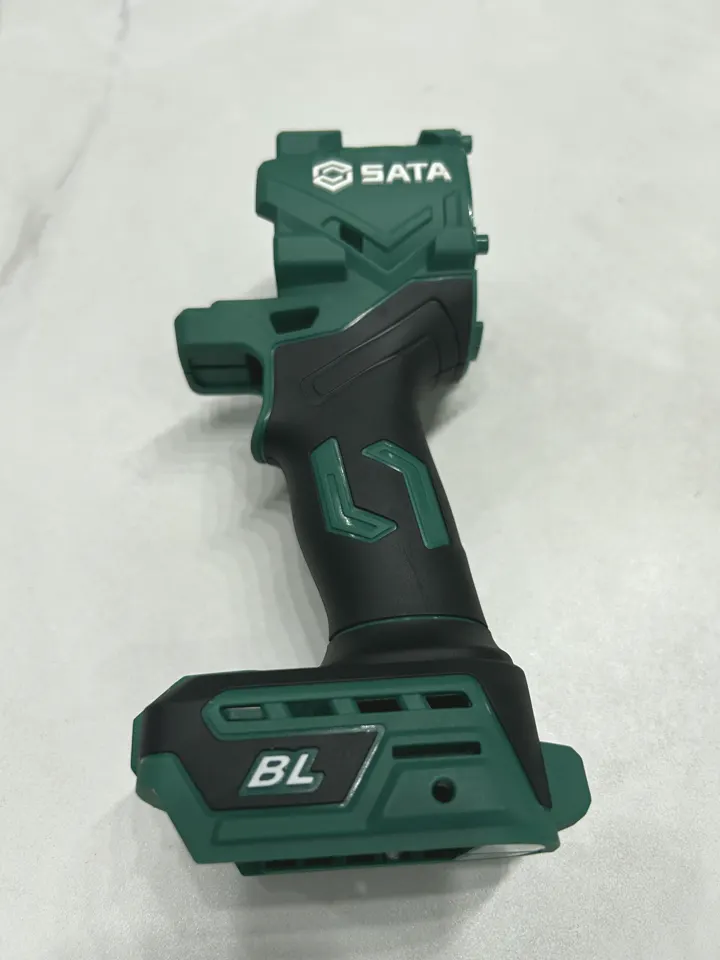
What the Jinsu B7G6 and A2G30 datasheets actually report
These are typical supplier-sheet values, not guaranteed purchase limits. The two sheets use different test standards or speeds for several properties and do not state whether their mechanical specimens were dry or moisture-conditioned. Read each result with its method rather than treating the two columns as a controlled head-to-head test.
| Reported property | B7G6 · PA6 GF30 | A2G30 · PA66 GF30 | How to use it |
|---|---|---|---|
| Glass fiber | 30 ± 2%, ISO 3451 | Described as 30% GF; no measured content stated | Both are marketed as GF30; only B7G6 supplies a fiber-content test in these sheets. |
| Density at 23°C | 1.19 g/cm³, ASTM D792 | 1.36 g/cm³, ISO 1183 | These are the reported grade values under different methods. Confirm mass in the molded part when weight or piece cost matters. |
| Tensile strength | 150 MPa, ASTM D638, 50 mm/min | 160 MPa, ISO 527, 5 mm/min | Do not rank 160 vs 150 as a controlled strength comparison: method and speed differ. |
| Flexural modulus | 8,600 MPa, ASTM D790, 2 mm/min | 7,500 MPa, ISO 178, 2 mm/min | Standards differ; request a matched method and moisture state for stiffness-critical design. |
| Notched impact | 15 kJ/m² as reported, ASTM D256 Izod, 23°C | 11 kJ/m², ISO 179 Charpy, 23°C | Different impact methods and specimens. Do not compare or convert the two numbers without a matched test. |
| Heat-deflection temperature | 210°C, ASTM D648, 1.8 MPa | 240°C, ISO 75, 1.82 MPa, unannealed | Separate screening results, not allowable long-term service temperatures or a strict same-method ranking. |
| Molding shrinkage | 0.4–0.6%, ISO 294 | 0.4–0.9%, ISO 2577 | Methods and specimen details differ; measure shrinkage and warp in the production mold. |
Source: Jinsu-supplied PA6GF30 / B7G6 and PA66+GF30 / A2G30 material sheets. The A2G30 sheet is dated 20 April 2026. Both describe typical values for reference rather than inspection guarantees. Ask for the current grade-specific PDF and agreed acceptance limits before ordering.
The published sheets identify two real candidates, but they do not prove that one will carry more load in a humid, hot or welded component. That requires matched-condition testing. In particular, neither sheet supplies a dry-versus-conditioned mechanical table, creep curve or fatigue result for these two grades.
Start with the failure mode, then shortlist a material
| Structural-part situation | Sensible first trial | What must still be proven |
|---|---|---|
| A loaded bracket near a heat source | Shortlist A2G30 and any suitable heat-stabilized alternatives | Obtain same-method hot and conditioned data, creep, fatigue and strength retention at the actual temperature and load duration; the two TDS HDTs alone are insufficient. |
| A tight-tolerance housing or bearing seat exposed to humid air | Trial both B7G6 and A2G30 | Neither sheet gives an equilibrium moisture value for these grades. Measure dimensions and fit after conditioning, along and across flow. |
| A ribbed housing with a critical weld line, snap or impact requirement | Trial both; consider a specifically impact-modified grade if needed | The printed Izod and Charpy values cannot be ranked. Test weld-line strength and local impact of the molded geometry. |
| A moderate-temperature part with long flow paths and a strict piece-cost target | Compare both in the production mold | Fill pressure, warp, cycle time, scrap and delivered material price for the exact grades. |
| Hot water, coolant or aggressive cleaning exposure | Specify the exposure before choosing a base polymer | Grade-specific hydrolysis or chemical-aging data plus retained strength and leak/fit testing; “GF30” is not a durability rating. |
These are shortlisting rules, not automatic approvals. If neither grade maintains dimensions or mechanical performance throughout the service envelope, consider a different formulation or polymer family rather than forcing a PA6-versus-PA66 choice.
Moisture changes both fit and load capacity
Glass fiber limits some dimensional movement, but the polyamide matrix still absorbs water. The result is time-dependent and directional: a flow-aligned rib can behave differently from a feature across the flow direction. Moisture can also lower stiffness, so a bracket that meets a dry deflection limit may miss it after conditioning. The Jinsu B7G6 and A2G30 sheets do not report equilibrium moisture uptake or paired dry/conditioned modulus, so their listed mechanical values cannot answer that service question on their own.
For context only, a separate, same-supplier published pair—PA6 GF30 B3EG6 and PA66 GF30 A3EG6—reports equilibrium moisture ranges of 1.9–2.3% and 1.5–1.9% at 23°C/50% RH, respectively. Its tensile modulus changes from 9.5 to 6.2 GPa for the PA6 grade and 10.0 to 7.2 GPa for the PA66 grade from dry to conditioned. Those values demonstrate why conditioning matters; they are not values for B7G6 or A2G30.
Specify whether the drawing and mechanical requirements apply as molded, dry, conditioned at a defined atmosphere, or after a defined liquid exposure. Measure mass, key dimensions and functional fit in that same state. A 24-hour immersion number is not a dimensional tolerance, and a mold-shrinkage value does not predict later moisture swelling. Our separate guide explains why nylon dimensions change after water absorption.
For a precision assembly, check the locations that actually fail: bolt-hole spacing, bearing seats, gasket compression, snap engagement and flatness. If the component is hot and wet for long periods, assess chemical degradation and mechanical-property retention separately from reversible moisture conditioning.
Heat: do not turn HDT into a continuous-use temperature
HDT is measured under a specified bending load and heating procedure. It is useful for comparing materials at the same test condition, but it does not establish allowable stress over months or years. Jinsu's B7G6 sheet reports 210°C under ASTM D648 at 1.8 MPa; the A2G30 sheet reports 240°C under ISO 75 at 1.82 MPa on an unannealed specimen. These different methods and unspecified specimen details do not support a precise 30°C head-to-head performance gap.
The distinction between HDT and lifetime is real even with a matched test method. The separate B3EG6 and A3EG6 examples report HDTs of 210°C and 250°C by ISO 75, yet both list 135°C for the IEC 60216 temperature index at 50% tensile-strength loss after 20,000 hours. Those are different manufacturer grades, not substitute data for B7G6 or A2G30; they illustrate why an HDT must not be sold as a continuous-use rating.
For a warm load-bearing part, obtain grade-specific creep curves, strength-versus-temperature data and heat-aging results. Test at the highest realistic part temperature, not just ambient air temperature. Include humidity, chemicals and cyclic loading where relevant. If a supplier calls a grade “heat stabilized,” ask for the stabilization test and retained-property criterion rather than treating the label as proof.
The mold can matter as much as the base resin
Short fibers align during filling. Gate location, wall transitions and ribs therefore influence local stiffness, shrinkage and warpage. A weld line where two flow fronts meet can be much weaker than a standard tensile bar, particularly when that line falls across a loaded boss or snap. BASF's material-modeling guidance explicitly treats fiber orientation, moisture, temperature and load rate as linked variables; Envalior's weld-line guidance advises checking gate location, flow path, venting and the weld line in the actual geometry.
Do not copy one grade's molding settings to another. The Jinsu sheets list 100–120°C drying as a starting range (4–5 hours for B7G6; 4–6 hours for A2G30), and mold temperatures of 79–90°C and 80–100°C, respectively. The A2G30 sheet separately lists 250–270°C melt temperature and 280–300°C nozzle temperature. Melt temperature describes the polymer melt; nozzle temperature describes the nozzle zone. They are different quantities and their ranges need not match. Neither is the mold temperature. These are grade-sheet reference ranges, so record the actual melt, nozzle and mold conditions separately during trials. Drying time also depends on starting pellet moisture and dryer performance; verify pellet moisture and appearance rather than relying on time alone.
A switch from PA6 GF30 to PA66 GF30 should trigger a mold trial, especially if the part has long flow paths, multiple gates, thin ribs or tight flatness requirements. Mold-shrinkage figures from different test boxes and settings are not directly transferable to the production cavity.
A qualification plan that leads to a defensible choice
- Define the service envelope. Record peak and normal part temperatures, dry and wet exposure, load magnitude and duration, vibration or impact, chemicals and required life. Define measurable acceptance limits for deflection, strength, dimensions and function.
- Request exact-grade documents. For B7G6 and A2G30, request updated dry/conditioned data and matched-method tensile, flexural, impact and HDT results, plus creep and aging curves where needed. Record fiber content, stabilizer, color and test methods. Do not compare an unmodified grade with a stabilized one and attribute the difference solely to PA6 versus PA66.
- Mold both candidates in representative conditions. Record dryer and measured pellet moisture, melt and mold temperatures, gate and weld-line locations, packing, cycle time and scrap. Keep the same critical geometry and inspection locations.
- Test parts in the states that matter. Include as-molded and service-conditioned specimens. Measure dimensions parallel and normal to flow, load-bearing features, weld-line strength, creep or fatigue, and functional assembly. Add hot-water or chemical aging only when the application requires it.
- Compare total part cost. Include quoted resin price, drying energy, cycle time, scrap, tooling changes, inspection and field-failure risk. A lower resin price is not necessarily a lower accepted-part cost.
Use the general PA6 vs PA66 buying guide for a broader polymer-family overview. For a structural-part trial, send the drawing, load case and service conditions to Jinsu's technical team. Request the current B7G6 and A2G30 datasheets and samples—or ask which other grade is actually being proposed—before comparing prices or approving a substitute.
Frequently asked questions
Is PA66 GF30 always the stronger structural material?
No. B7G6 and A2G30 list 150 and 160 MPa, but their tensile methods and test speeds differ, and neither sheet defines a dry/conditioned state. The higher printed number alone does not establish the stronger molded structure. Compare exact grades under matched conditions in the actual geometry.
Does 30% glass fiber prevent nylon from absorbing water?
No. The polyamide matrix can still absorb water. The supplied B7G6 and A2G30 sheets do not quantify their equilibrium uptake, so measure the actual parts under a defined humidity or liquid-exposure condition.
Can I use A2G30's 240°C HDT as its continuous service temperature?
No. HDT is a short-term deflection measurement under a specified load. Use the grade's long-term heat-aging, creep and retained-strength data for sustained loads.
Can I replace PA6 GF30 with PA66 GF30 without changing the mold?
Do not assume so. Check fill, fiber orientation, weld-line location, shrinkage, flatness and critical fits in a production-representative trial. A material substitution may require processing or tooling changes.