
Source Plastic Raw Materials from China (2026)
Sourcing plastic raw materials from China? JinsuNM's 2026 buyer guide covers factory audits, IATF/UL certifications, sample testing & pricing strategies. Get free samples today.
China is the world's largest producer and exporter of plastic raw materials, with thousands of suppliers ranging from major petrochemical enterprises to mid-sized traders and compounding factories. For international buyers, selecting a reliable, professional, long-term partner from this vast landscape is a critical decision. This guide provides a systematic supplier evaluation framework across five dimensions: factory audits, quality certifications, sample testing, price negotiation, and logistics.
Jinsu has not completed UL Yellow Card certification. TDS data and UL94 test results do not constitute UL recognition. If your project requires a Yellow Card, verify certification for the exact grade before approval or purchase.
Next step: from material choice to inquiry
Move from application guidance to a grade, a formulation, and a clear quote request.
1. On-Site Factory Audit
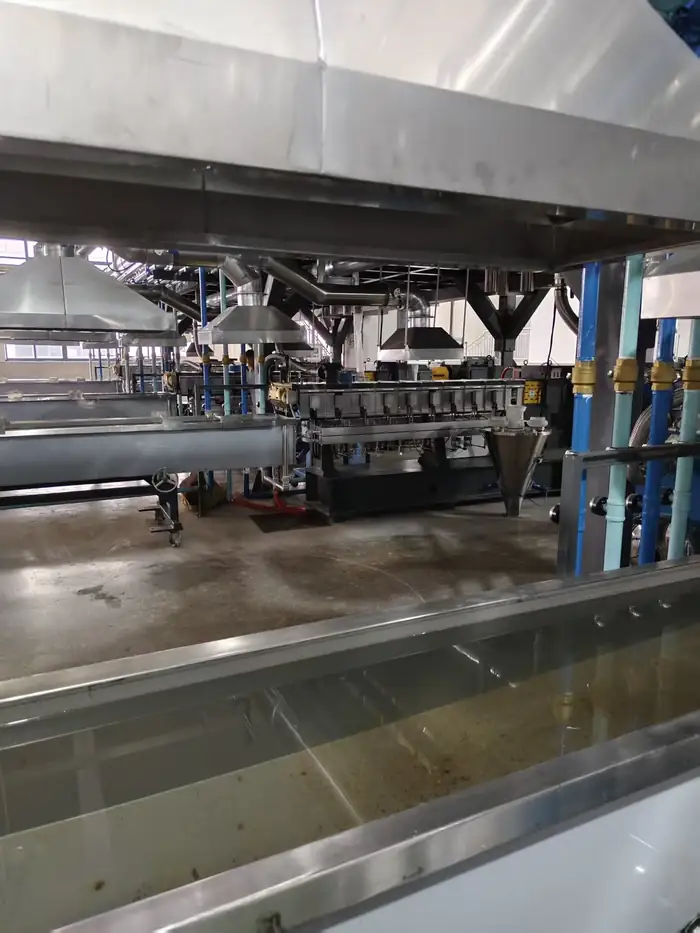
Factory auditing is the first and most critical step in supplier evaluation. Key audit points include:
Production Line Scale: Check the number, model, and capacity of extruders. Generally, factories with 10+ twin-screw extrusion lines offer more reliable capacity stability and delivery capability.
Laboratory Capability: Professional compounding factories should be equipped with TGA, universal testing machines, impact testers, melt flow indexers, Vicat softening point testers, and other core testing equipment. Suppliers without a lab raise serious quality control concerns.
Raw Material Warehouse: Observe whether storage conditions meet standards — temperature and humidity control, moisture protection measures. Nylon-based materials are extremely moisture-sensitive; warehouse conditions directly reflect supplier professionalism.
Production Floor Management: 5S management level, operator standardization, and whether cleaning/color-change procedures are formalized.
Practical Tip: If an in-person visit isn't possible, request factory videos with date watermarks, or engage a third-party inspection agency such as SGS or TÜV for remote factory audits.
Example: For instance, Jinsu operates 14 twin-screw extrusion lines with an annual capacity of 36,000+ tons, ensuring stable supply even during peak seasons.
2. Quality Certification System
Quality certifications are an important benchmark for measuring supplier professionalism and compliance. Core certifications include:
ISO 9001:2015 Quality Management System: This is the baseline entry requirement. Suppliers without ISO 9001 lack standardized production processes and carry higher batch-to-batch quality fluctuation risk.
IATF 16949 (Automotive): If your products serve the automotive industry, strongly recommend suppliers hold IATF 16949 certification. Its requirements for supply chain management, process control, and risk prevention far exceed ISO 9001.
REACH & RoHS (EU Market): Plastic raw materials exported to the EU must comply with REACH regulations and the RoHS directive. Require suppliers to provide third-party test reports confirming no excessive hazardous substances.
UL Certification (US Market): For flame-retardant plastics (FR-PA, FR-PC, FR-PP), UL Yellow Card certification is mandatory for entering the US market. Verify that the UL file number can be queried on the official UL website.
Practical Tip: Don't just look at certificates — request third-party test reports from the last 6 months and cross-verify their authenticity.
ESG & Carbon Footprint (2026 must-have): EU and US buyers - especially automotive and electronics - now require carbon footprint data from their supply chain. Ask whether the supplier can provide product-level carbon footprint/LCA reports or recycled-content (PCR) options. This is what separates modern compounders from traditional traders.
3. Sample Testing & Validation
Sample testing is the most direct way to validate a supplier's actual supply capability. The proper sample testing process should include:
Initial Sample Testing: Request 5–10 kg free samples (buyer usually covers shipping). Focus first-round testing on basic physical properties — tensile strength, impact strength, melt flow index, heat deflection temperature, etc.
Injection Molding Trial: Use your actual mold for trial molding to verify material flowability and moldability. Key watch points: part appearance (silver streaks, fiber blooming, sink marks), dimensional stability, and demolding performance.
Aging Tests (if applicable): For outdoor-use or high-temperature products, conduct UV aging or thermal-oxidative aging tests to verify long-term performance.
Multi-Batch Consistency Validation: After initial sample approval, request small samples (25kg each) from 2-3 different production batches to test batch-to-batch consistency. This is the most effective way to detect quality control issues.
Retention Samples: Require the supplier to retain samples from production lots for at least 6 months for traceability in case of quality issues.
Practical Tip: Don't place large orders based solely on initial samples. Experienced buyers request a 'batch trial' — use 100-500kg to produce one or two batches of finished products, observing production stability and final product consistency.
NDA & IP Protection: Custom compounding involves confidential formulations. Before sharing specs, sign an NDA. Jinsu signs NDAs and exclusive formulation agreements as standard practice and protects your formulation from being resold to third parties.
4. Price Negotiation Strategy
Plastic raw materials are typical cost-sensitive commodities, and price negotiation capability directly impacts project profitability. Here are key strategies:
Understand Quotation Structure: Chinese suppliers typically use three quotation methods — EXW, and CIF. quotes are usually 5-10% lower than CIF (excluding freight and insurance). Clarify your required trade terms to avoid hidden costs later.
Track Raw Material Markets: Plastic raw material prices are highly correlated with crude oil and monomer prices. Develop a habit of weekly monitoring of upstream price fluctuations — naphtha, styrene, caprolactam, etc. — and lock in prices or sign long-term agreements when raw material costs are low.
Volume-Price Negotiation: Typical volume-price relationships — below 5 tons/month, prices usually 5-10% higher; 20+ tons/month, negotiate 3-5% discount; 50+ tons/month, qualify for quarterly/annual contract pricing.
Dedicated Line Cost Advantage: If you have stable demand (50+ tons/month), negotiate a 'dedicated line' arrangement where the supplier assigns one extrusion line exclusively for your grade. This eliminates cleaning/changeover costs, typically yielding an additional 3-5% price advantage.
Payment Term Negotiation: Common methods — T/T 30% advance + 70% before shipment, L/C (cost ~0.1-0.3%), OA (open account, for well-established clients only). For new partnerships, use T/T for the first few orders; more flexible terms can be negotiated after trust is established.
Hidden Cost Audit: Confirm cost responsibility for — packaging (bags/supersacks), pallets, domestic transport, inspection fees, fumigation fees (wooden pallets for export).
5. Logistics & Delivery Management
Logistics is the most easily overlooked yet most impactful link in international trade. Key areas to focus on:
Packaging Standards: Standard packaging is 25kg/bag. Export shipments typically use 1-ton big bags or 1.25-ton palletized loads. Confirm that the supplier's packaging is suitable for long-distance sea freight — inner aluminum foil moisture-barrier bag + outer woven bag is standard for nylon materials.
Transport Mode Selection: Sea freight (most economical, 20-40 days), China-Europe Railway Express (15-20 days, 20-40% more expensive than sea), Air freight (3-7 days, for emergencies, 5-10x sea freight cost). Use sea freight for routine orders; consider rail for urgent replenishment.
Partner Freight Forwarders: Good suppliers typically have partner forwarders offering better rates than market. However, retain the right to use your own forwarder for price comparison and logistics control.
Lead Time Management: Standard lead times — stock products 3-7 days, custom compounds 7-15 days. Ask the supplier for historical On-Time In-Full (OTIF) rates; top suppliers should achieve 95%+.
Customs Documentation: Confirm the supplier can provide — commercial invoice, packing list, bill of lading, certificate of origin (FORM A/FORM E/FORM F), COA (certificate of analysis), MSDS.
Contingency Plans: Confirm with the supplier — if shipping delays, customs inspections, or other uncontrollable factors occur, do they have alternative logistics plans or emergency replenishment mechanisms?
DDP Made Easy: Jinsu offers DDP delivery to major EU/US ports with pre-cleared customs documentation, reducing your import complexity.
Quality Dispute Resolution: What if something goes wrong? Jinsu responds to complaints within 24 hours, supports return/replacement policies, and accepts third-party arbitration (SGS/TÜV).
Conclusion
Selecting a plastic raw material supplier in China is not an overnight process — it's a long-term decision requiring systematic evaluation, progressive validation, and continuous optimization.
Summary of the five-step method: Audit the factory (verify capacity and quality control) → Review certifications (confirm compliance and standardization) → Test samples (validate actual supply quality) → Negotiate pricing (build competitive cost structure) → Manage logistics (ensure stable and efficient delivery).
Jinsu (Suzhou Jinsu New Material), as an industry-and-trade integrated plastic raw material supplier, operates 14 twin-screw extrusion lines and a fully-equipped testing laboratory. We are ISO 9001:2015 certified and support /CIF/DDP trade terms. We offer free samples and technical support to every new customer — contact us to start a partnership.
Ready to Verify Our Claims? 📥 Download the Factory Audit Checklist + Certification Package (PDF) 🧪 Request a Free Sample Kit (PA6/PA12/PPS available) 💬 Schedule a Virtual Factory Tour (Zoom/Teams) 📊 Get Real-Time Quotation (response within 4 hours)
Disclaimer: Data in this guide is based on standard test conditions (ISO/ASTM) and typical values. Actual performance must be verified in your application. Brand names mentioned belong to their respective owners and are used for technical reference only.
Need help with supplier selection?
Jinsu offers free technical consultation and sample testing to help you find the best plastic raw material solution.
Contact Our Engineers