
Transparent ABS (MABS) Guide: Properties & Grades
Everything you need to know about MABS transparent ABS resin: optical properties, mechanical strength, molding tips, and how to choose the right grade for your product.
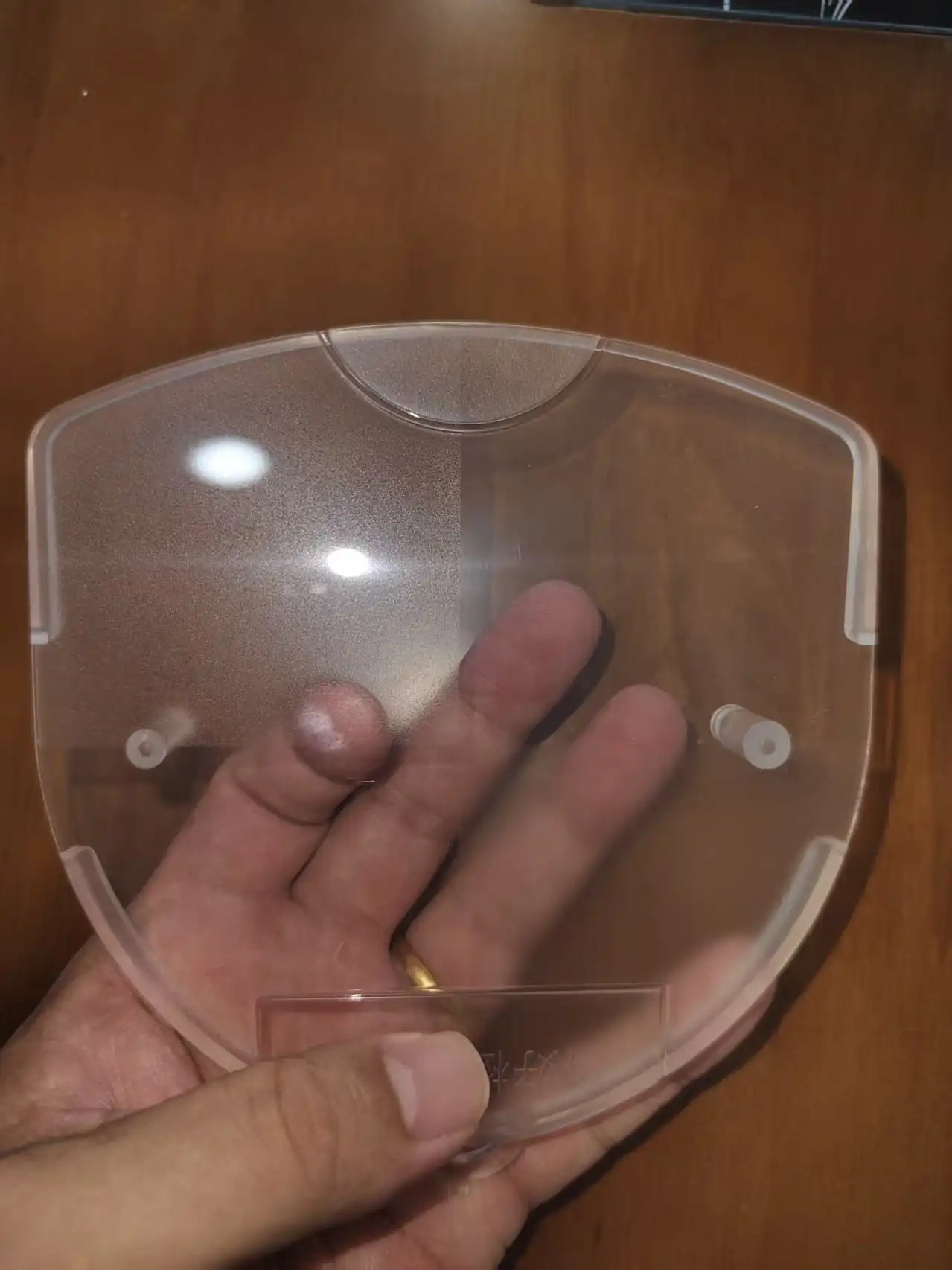
Transparent ABS, also known as MABS (Methyl Methacrylate Acrylonitrile Butadiene Styrene), is a specialty grade of ABS resin that combines the toughness and impact resistance of standard ABS with the clarity of PMMA. It has become the material of choice for applications that need both transparency and durability, from refrigerator crisper drawers and food containers to cosmetics packaging and medical device housings.
Next step: from material choice to inquiry
Move from application guidance to a grade, a formulation, and a clear quote request.
What Is Transparent ABS (MABS)?
MABS is produced by copolymerizing methyl methacrylate (MMA) with the ABS base resin. The MMA component raises light transmittance to 85-90%, close to PMMA, while retaining ABS's excellent impact strength (typically 15-25 kJ/m² Izod).
Compared with standard ABS (opaque, light transmittance <10%), MABS offers a unique balance: transparency plus toughness. Compared with PMMA, it is 5-10 times more impact resistant and does not craze as easily under stress.
Key properties of MABS: light transmittance 85-90%, haze <3%, tensile strength 45-55 MPa, HDT (1.82 MPa) 80-95°C, Izod impact 15-25 kJ/m². These values vary by grade.
MABS vs PMMA vs Standard ABS
Choosing between MABS, PMMA, and standard ABS depends on your priority:
- Standard ABS: opaque, cheapest, best toughness. Use when clarity is not needed. - PMMA (acrylic): highest clarity (92%+), scratch resistant, but brittle. Best for displays and lenses. - MABS: 85-90% clarity with ABS-level toughness. Best for parts that see impact and must look transparent.
Cost-wise, MABS sits between ABS and PMMA. In injection molding, MABS flows well and fills thin walls more easily than PMMA, reducing warpage risk.
Typical MABS applications: refrigerator crispers, food storage containers, cosmetic jars, toys with clear windows, medical devices, and transparent appliance parts.
Injection Molding Tips for MABS
To achieve maximum clarity with MABS, follow these molding guidelines:
- Drying: 80-85°C for 2-4 hours, moisture below 0.05%. Wet resin causes splay and haze. - Melt temperature: 220-250°C. Avoid over 260°C to prevent yellowing. - Mold temperature: 40-60°C (higher for optical parts). - Injection speed: medium to high; slow fill can create flow marks. - Gate design: use large gates to reduce shear heating and jetting.
Common defects: haze (wet resin or low mold temp), flow marks (slow fill), yellowing (excessive melt temp or residence time). Fix by drying thoroughly and optimizing process window.
How to Choose the Right MABS Grade
When sourcing transparent ABS, evaluate these factors:
1. Clarity level: standard MABS (85-88%) vs high-clarity grades (88-90%). 2. Impact requirement: standard grades vs high-impact grades for cold environments. 3. FDA compliance: for food contact applications, confirm FDA 21 CFR 177.1020 compliance. 4. Flow: thin-wall designs need high-flow grades. 5. Color consistency: batch-to-batch color stability matters for cosmetic packaging.
For buyers: request TDS (technical data sheet) and verify light transmittance, haze, and Izod impact values match your spec. Order samples before mass production and test with your actual mold.
Mainstream MABS Grades & Chemical Resistance
Transparent ABS grades are distinguished by their base tint: blue-tint grades (bluish undertone) look cooler and more crystal-like, while ice-tint grades are closer to water-clear. Both are transparent, but the tint affects the final appearance of your product, so always confirm the shade before mass production.
The four most popular MABS grades on the market are:
- Dagu DG-513 (Tianjin Dagu): the best cost-performance MABS on the market. It meets RoHS and SVHC (REACH) requirements and is certified by the US FDA (21 CFR 177.1020) for food contact. This is Jinsu's recommended MABS grade. - Chi Mei PA-758: the industry benchmark for clarity, widely used in cosmetics packaging and appliance panels. - LG Chem TR-558: high clarity with a good impact balance, popular in Southeast Asia and the Americas. - Toray 920: strong heat resistance and rigidity, suited to demanding transparent structural parts.
For applications that regularly contact cleaning agents - washing machine lids and tubs, robot vacuum water tanks, kitchen utensils and containers - standard MABS may develop stress cracking over time. For these cases, Dagu offers DG-T519, a chemical-resistant MABS grade specially developed to withstand detergents, disinfectants and cleaning solutions.
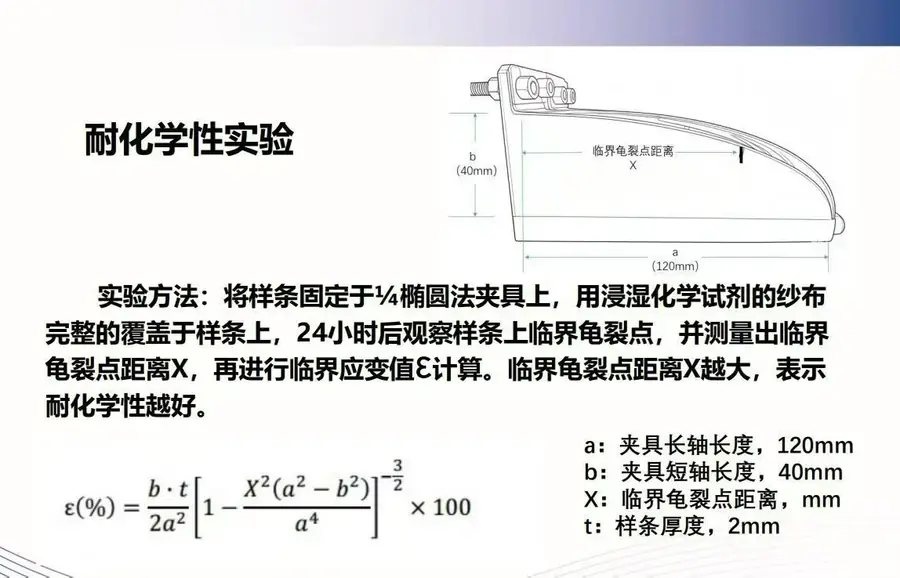
Chemical resistance is evaluated with the 1/4 ellipse (quarter-ellipse) jig test: the specimen is fixed on a quarter-ellipse jig, a gauze soaked with the chemical reagent is fully wrapped over the specimen, and after 24 hours the critical crazing point on the specimen is observed and its distance X from the clamping end is measured. The critical strain value E is then calculated. The larger the critical crazing distance X, the better the chemical resistance.
Conclusion
Transparent ABS (MABS) fills the gap between PMMA clarity and ABS toughness. For applications from food storage to medical devices and cosmetic packaging, it delivers the look of glass with the durability of engineering plastic. Choose the right grade, control your drying and molding process, and MABS will give you consistent, crystal-clear parts. Jinsu supplies MABS transparent ABS pellets with full TDS support - request samples to test in your own production line.
Need help with supplier selection?
Jinsu offers free technical consultation and sample testing to help you find the best plastic raw material solution.
Contact Our Engineers